
TL;DR
LinkedIn distribution is less about hacks and more about sustained relevance signals.
Early meaningful interaction quality still matters, but post structure and audience-fit now matter more than timing tricks.
The RELAY model helps teams design posts that compound authority.
Consistency plus topical clarity outperforms random “viral format” chasing.
Quick Definition
The LinkedIn algorithm in 2026 can be best understood as a ranking system for professional relevance. It prioritizes content that generates credible interactions from the right audience over content that merely triggers superficial activity.
Why So Many LinkedIn Strategies Feel Outdated
Most “algorithm tips” still focus on old playbooks: post at exact times, bait comments, force line breaks, and optimize vanity reactions. Those tactics can create occasional spikes, but they rarely build durable authority.
Counterargument: “Viral formatting still works, so fundamentals are overrated.”
Trade-off: high-velocity formats can still produce reach bursts. But without expertise consistency and audience relevance, that reach decays quickly.
Edge case: creator-led profiles with strong personality can outperform with looser structure, but even they need thematic consistency over time.
Concrete scenario: two consultants post equally often. One posts trend templates with low topical coherence, the other publishes focused domain insights weekly. Short-term spikes favor the first; long-term authority compounding favors the second.
Common misconception: algorithm optimization is separate from content strategy. On LinkedIn, they are tightly coupled.
Takeaway: Algorithm success is a strategy quality signal.
Takeaway: Random format hacking rarely builds durable trust.
The RELAY Model
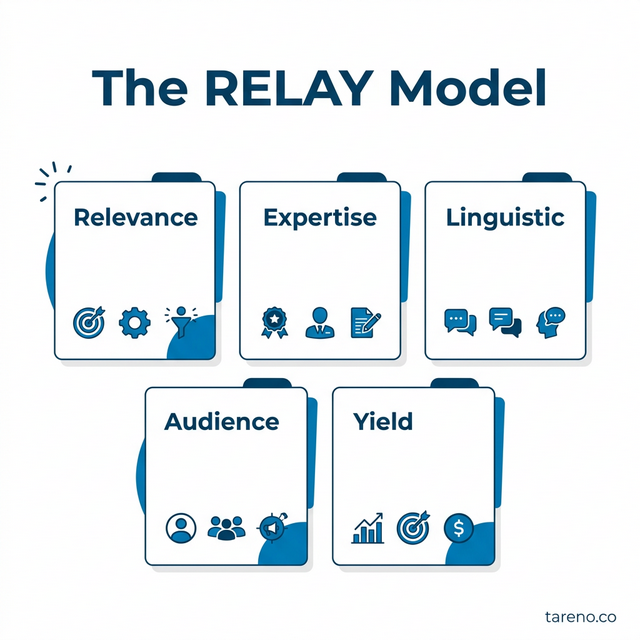
The RELAY Model Components
Use RELAY for LinkedIn authority distribution:
R — Relevance clarity
E — Expertise signal strength
L — Linguistic accessibility
A — Audience interaction quality
Y — Yield loop (weekly iteration)
Relevance clarity
Every post should map to one core problem your audience actually faces.
Expertise signal strength
Show reasoning, frameworks, trade-offs, and implementation reality.
Linguistic accessibility
Write clear, scannable, low-jargon content without oversimplifying.
Audience interaction quality
Aim for meaningful replies, not empty engagement bait.
Yield loop
Review what drives qualified conversations and refine systematically.
Counterargument: “This is too thoughtful for fast-moving feeds.”
Trade-off: yes, RELAY asks for discipline. But disciplined relevance is exactly what compounds in professional networks.
Edge case: event-driven periods can temporarily shift toward reactive posting, but baseline authority cadence should continue.
Concrete scenario: team maps each post to one target pain point and one decision framework. Comment quality improves from generic praise to substantive discussion.
Common misconception: engagement volume equals quality.
Takeaway: RELAY optimizes for qualified attention, not noise.
Takeaway: Distribution quality follows content specificity.
What the Algorithm Likely Rewards in Practice
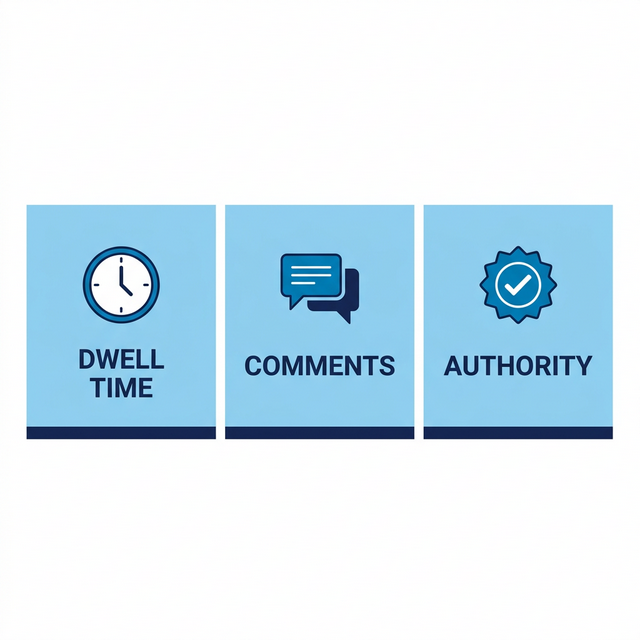
The 2026 LinkedIn Algorithm prioritizes Dwell Time, Meaningful Comments, and Creator Authority over simple vanity metrics.
Topical consistency over random variety
Meaningful dwell and discussion quality
Credible profile-context alignment
Audience-fit relevance signals
Sustained posting reliability
Counterargument: “If quality mattered most, everyone writing well would win.”
Trade-off: quality is necessary but not sufficient. Positioning clarity, network fit, and consistency cadence still matter.
Edge case: new accounts may see slower initial distribution despite good content due to weaker historical trust signals.
Concrete scenario: founder posts high-quality insights but across unrelated themes. Performance stays inconsistent. After narrowing to one strategic lane, reach and qualified comments stabilize.
Common misconception: algorithm prefers one content format universally.
Takeaway: Coherence beats constant experimentation.
Takeaway: The algorithm favors profiles that make audience prediction easy.
Content Formats: What to Use and When
Use text posts when
you want fast thought leadership distribution
you can state one clear argument and one practical takeaway
Use document/carousel posts when
you need structured explanation
framework clarity matters
Use native video when
nuanced delivery benefits from voice and context
you can sustain quality production rhythm
Counterargument: “Only one format should be used for growth.”
Trade-off: format focus can improve operational consistency, but format monoculture can limit message depth.
Edge case: lean teams can run one primary + one secondary format for operational simplicity.
Concrete scenario: team keeps weekly text authority posts and biweekly framework carousels, reducing production chaos while preserving depth.
Common misconception: format determines success more than idea quality.
Takeaway: Choose formats by strategic function, not hype.
Takeaway: Operational sustainability is a ranking advantage.
Tool Evaluation Rule (3 Categories × 3 Criteria)
Category 1: Planning & Editorial
content calendar clarity
topic-lane mapping
theme consistency tracking
Category 2: Production & Review
Draft -> Review -> Scheduled support
approval workflow transparency
version control for post variants
Category 3: Performance & Iteration
qualified interaction signal tracking
pattern-level review support
decision log visibility
30-Day LinkedIn Stabilization Plan
Week 1: Positioning reset
define 2–3 core thematic lanes
remove low-fit content categories
Week 2: RELAY rollout
map each post to one lane and one audience problem
add explicit framework or decision angle
Week 3: Conversation optimization
improve comment prompts for depth
prioritize meaningful response threads
Week 4: Yield review
identify posts that produced qualified discussions
refine hooks and narrative structure
Counterargument: “One month is too short to judge algorithm outcomes.”
Trade-off: long-term authority takes longer, but 30 days is enough to see whether relevance quality is improving.
Edge case: low-network profiles may need longer cycles for stronger signal.
Concrete scenario: after 30 days, a team sees moderate reach increase but major jump in relevant inbound conversations.
Common misconception: only impressions matter.
Takeaway: Qualified conversations are a better leading indicator than raw reach.
Takeaway: A system beats isolated “best post” moments.
Common Failure Patterns
posting across unrelated topics
overusing engagement bait
no weekly iteration routine
optimizing for vanity reactions
abandoning lane consistency after one weak week
Takeaway: Most LinkedIn stagnation is strategic inconsistency.
Free Tools (Quick Links)
LinkedIn Topic Lane Mapper — Keep post themes coherent over time.
Authority Post Blueprint — Build clearer insight structure per post.
Comment Quality Scorer — Track meaningful interaction depth.
Weekly Yield Review Sheet — Turn post outcomes into iteration decisions.
FAQ
Is LinkedIn still worth investing in heavily?
Yes, for B2B authority and professional trust building, especially with coherent positioning.
What matters more in 2026: timing or relevance?
Relevance and consistency matter more than timing hacks.
Should brands chase viral templates?
Only selectively. Template use without lane fit weakens long-term authority.
How often should teams post?
As often as they can maintain quality and thematic coherence.
Can small teams compete without big networks?
Yes, with focused lanes, high signal content, and disciplined iteration.
Conclusion
In 2026, LinkedIn rewards strategic clarity more than tactical gimmicks. Teams that build relevance consistency, expertise depth, and structured iteration loops can grow authority sustainably.
Key Takeaways
RELAY model improves distribution quality.
Thematic coherence is a core ranking asset.
Qualified interaction beats vanity engagement.
Weekly review creates compounding gains.
Advanced Layer: Distribution Quality vs Engagement Theater
A critical distinction in 2026 is the gap between visible engagement and strategic distribution quality. Posts can generate reactions and still fail at authority building if they attract low-fit attention.
Distribution quality on LinkedIn is increasingly tied to:
topical continuity across weeks,
profile-content coherence,
and discussion depth from relevant peers.
Counterargument: “Any engagement is good engagement because it boosts reach.”
Trade-off: broad engagement can expand awareness, but low-fit engagement often weakens positioning clarity and can reduce future relevance signals from your core audience.
Edge case: broad category creators may intentionally mix general and niche content to expand top-funnel. This works only if the niche anchor remains explicit.
Concrete scenario: a B2B operator posts generic productivity takes for reach and gets likes. Inbound pipeline stays flat. After shifting toward niche operational frameworks, total reactions drop slightly, but qualified conversations and leads increase.
Common misconception: algorithm success is measured by vanity volume alone.
Takeaway: Reach without relevance is expensive noise.
Takeaway: LinkedIn rewards authority consistency more than sporadic virality.
Comment Graph Dynamics: Why Replies Matter Differently Now
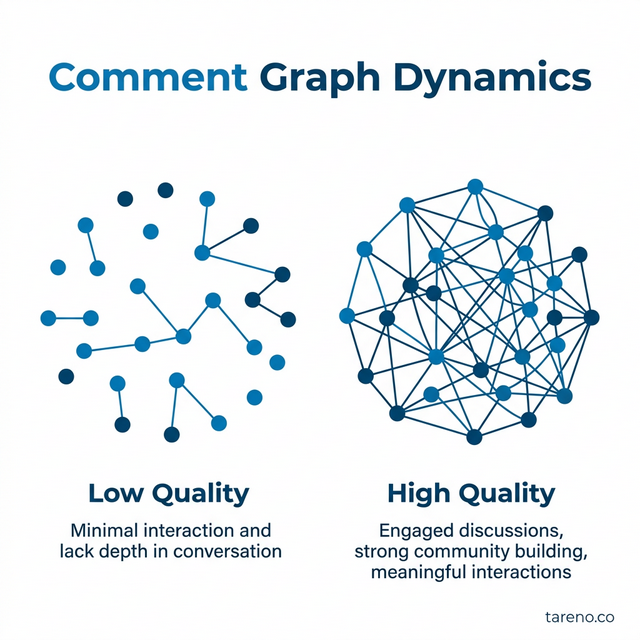
Comment Graph Dynamics Validation
Not all comments are equal. Shallow comments may increase activity count but do little for authority perception. High-signal comments (questions, counterpoints, implementation experiences) create stronger distribution context.
Advanced posting requires “comment architecture”:
Post invites one meaningful discussion vector.
Author replies with clarifying depth, not repetitive gratitude.
Thread evolves into practical reference value.
Counterargument: “Replying to every comment is always best practice.”
Trade-off: broad responsiveness is good, but low-value repetitive replies can consume bandwidth. Prioritize thread quality over reply quantity.
Edge case: high-volume creator accounts may need tiered response logic: strategic threads first, appreciation reactions second.
Concrete scenario: two posts with similar reach. One gets many “Great post!” comments. The other gets fewer but deeper operator discussions. The second post drives stronger profile-follow and inbound quality.
Common misconception: comment count equals discussion quality.
Takeaway: Optimize for comment substance, not comment volume.
Takeaway: Author reply quality is a ranking and trust signal.
Content Architecture for Authority Posts
High-performing authority posts in 2026 often include:
quick thesis,
named framework,
trade-off analysis,
implementation boundary,
one contrarian insight,
and practical next step.
Counterargument: “This structure is too heavy for feed consumption.”
Trade-off: overlong unstructured writing underperforms. Structured depth with scannable formatting performs better than either shallow hooks or dense walls of text.
Edge case: thought-provoking short posts can still work, but should be part of a broader cadence that includes deeper authority anchors.
Concrete scenario: a founder alternates short perspective posts with weekly framework posts. The framework posts become reference content; short posts fuel conversation momentum.
Common misconception: all posts should target maximum reach.
Takeaway: Authority cadence should include both momentum posts and anchor posts.
Takeaway: Anchor posts create compounding profile equity.
Weekly Yield Loop (Operational Template)
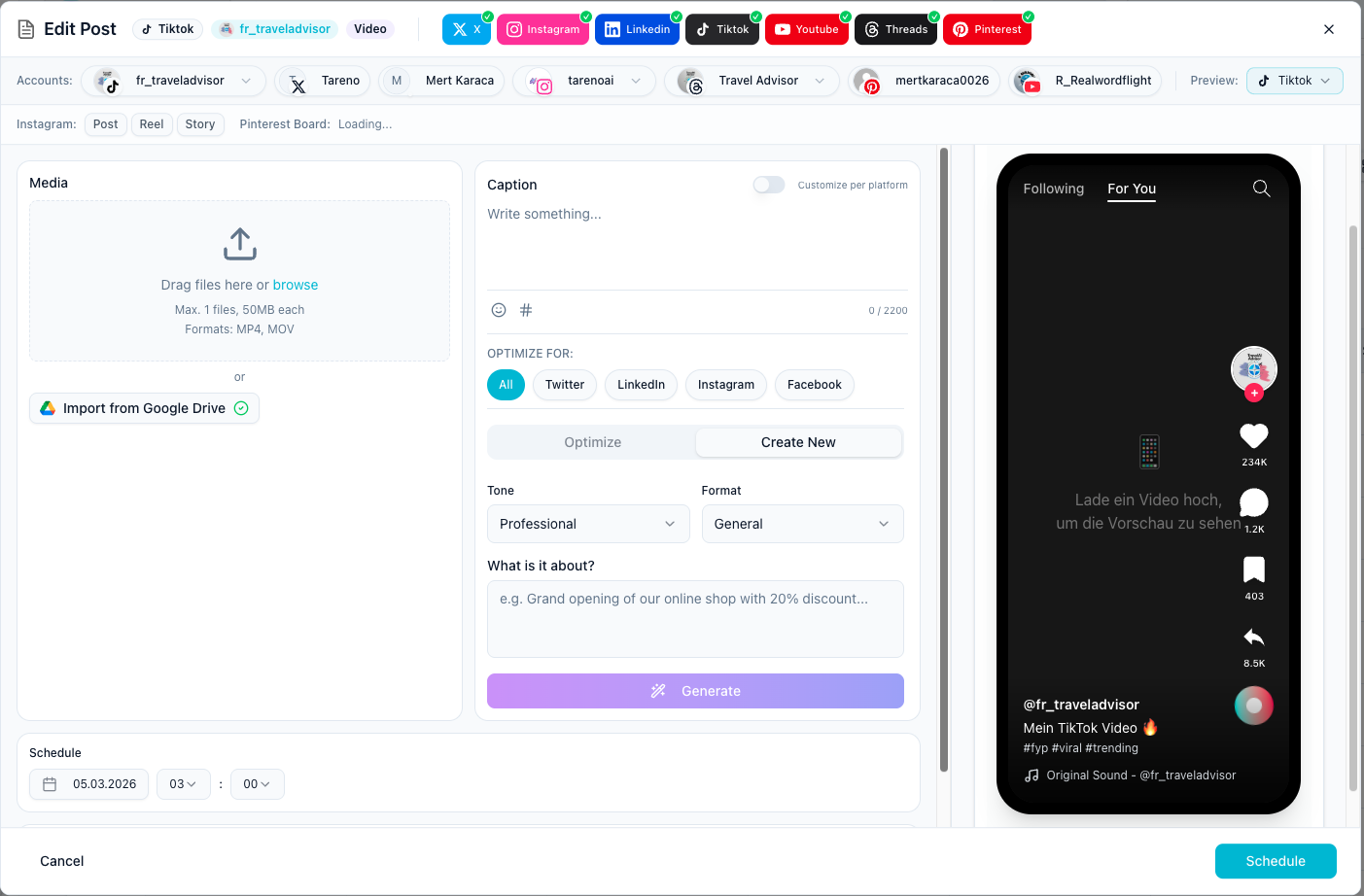
Using Tareno to schedule LinkedIn posts at optimal times for your B2B audience ensures a consistent content flow.
To avoid randomness, run one weekly loop:
Step 1: Cluster by topic lane
Group posts into 2–3 strategic lanes.
Step 2: Score quality
Rate each post on relevance, discussion depth, and actionability.
Step 3: Extract winners
Identify reusable hook pattern, framework structure, and CTA style.
Step 4: Remove noise
Kill low-fit themes even if they created vanity engagement.
Step 5: Rebuild next week
Publish one improved iteration per lane.
Counterargument: “This is over-optimization.”
Trade-off: without review, teams rely on memory bias and chase isolated wins. Light iteration loops create durable improvements.
Edge case: smaller teams can run biweekly loops if weekly is too heavy, but should maintain written decision logs.
Concrete scenario: team discovers “operator mistakes” format generates higher-quality discussion than “trend predictions.” They shift content mix accordingly.
Common misconception: intuition is enough after years of posting.
Takeaway: Experience plus process beats experience alone.
Takeaway: Written iteration decisions prevent strategic drift.
Portfolio Thinking: LinkedIn’s Role in a Multi-Channel System
LinkedIn should rarely be treated as a silo. For many B2B teams, it works best as:
authority surface,
conversation validation layer,
and narrative feed into newsletter, webinar, or long-form content.
Counterargument: “If LinkedIn is performing, why diversify?”
Trade-off: channel concentration can be profitable short-term but increases fragility. Portfolio strategy reduces dependency risk.
Edge case: early-stage operators may focus LinkedIn-first, then expand once message-market fit stabilizes.
Concrete scenario: team converts top LinkedIn discussions into newsletter deep-dives and sales enablement snippets. One post generates multi-surface value.
Common misconception: repurposing from LinkedIn is optional. It is often the biggest leverage point.
Takeaway: LinkedIn posts should feed a broader authority ecosystem.
Takeaway: The best post is one that compounds across assets.
Advanced Conclusion
In 2026, LinkedIn performance is less about beating the algorithm and more about becoming algorithmically legible as a credible authority source. That requires strategic lane discipline, high-signal discussion design, and repeatable iteration.
Teams that optimize for qualified attention, not vanity activity, build slower at first—but stronger over time.
Audio Version